OUT NOW: SEPT/OCT ’26 ISSUE #182
News and insights from the movers and storers industry


27th July 2026
Editorial Team

Patrick Hicks speaks to Glen Wills, Head of Sales at S Jones Containers, about the company’s growing role in container self-storage, the rise of automation and the practical innovations helping operators make more from their sites.
S Jones Containers has built a strong reputation as a supplier of shipping containers, specialist conversions and self-storage solutions.
However, its role in the sector increasingly extends beyond supplying equipment.
With its own self-storage operation, U Can Store It, alongside decades of experience supplying containers to operators around the UK, the company combines practical operating knowledge with product development, site planning and aftersales support.
For Glen Wills, Head of Sales at S Jones Containers, that combination is central to the business’ approach. His background in sales and customer-service leadership made the move into storage a natural progression, particularly in a sector where solving practical problems and building long-term customer relationships are so important.
“S Jones understands the industry from both sides,” he explains. “We operate our own self-storage business, while also supplying containers and related services to storage operators.”
While S Jones continues to supply standard containers to self-storage facilities, its StoragePro service has become an important part of the company’s offer. Designed for new entrants and established operators alike, the service supports customers through the planning and expansion process rather than simply delivering containers to site.
Glen says the idea behind StoragePro was to remove many of the challenges faced by operators when establishing a facility. The company can help determine the right container mix, prepare CAD layouts, consider site accessibility and security, and provide projected revenue calculations.
This approach reflects the view that a well-designed facility benefits not only the individual operator, but the wider self-storage sector. Glen believes that helping new businesses create professional, customer-friendly sites contributes to the industry’s long-term reputation.
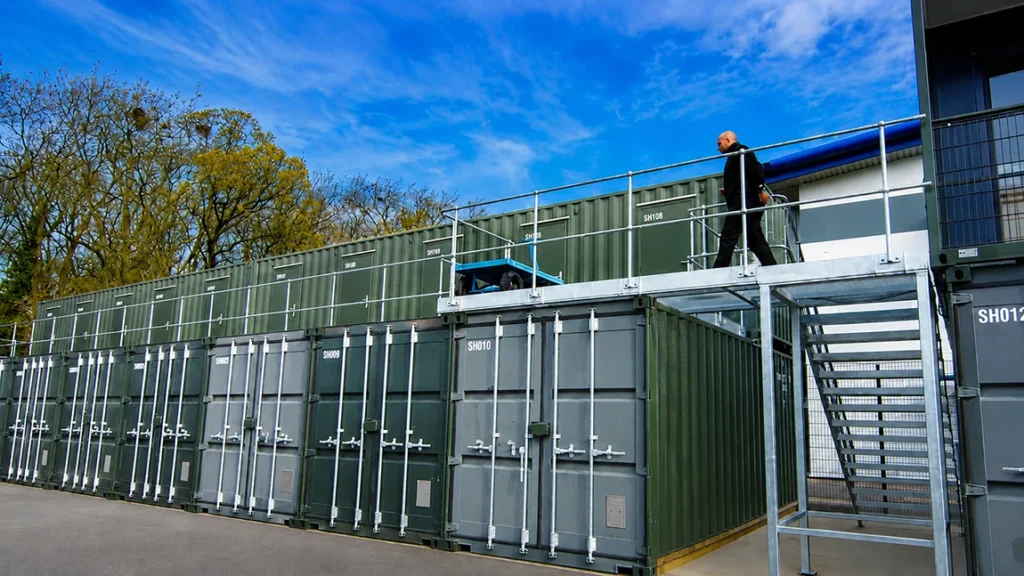
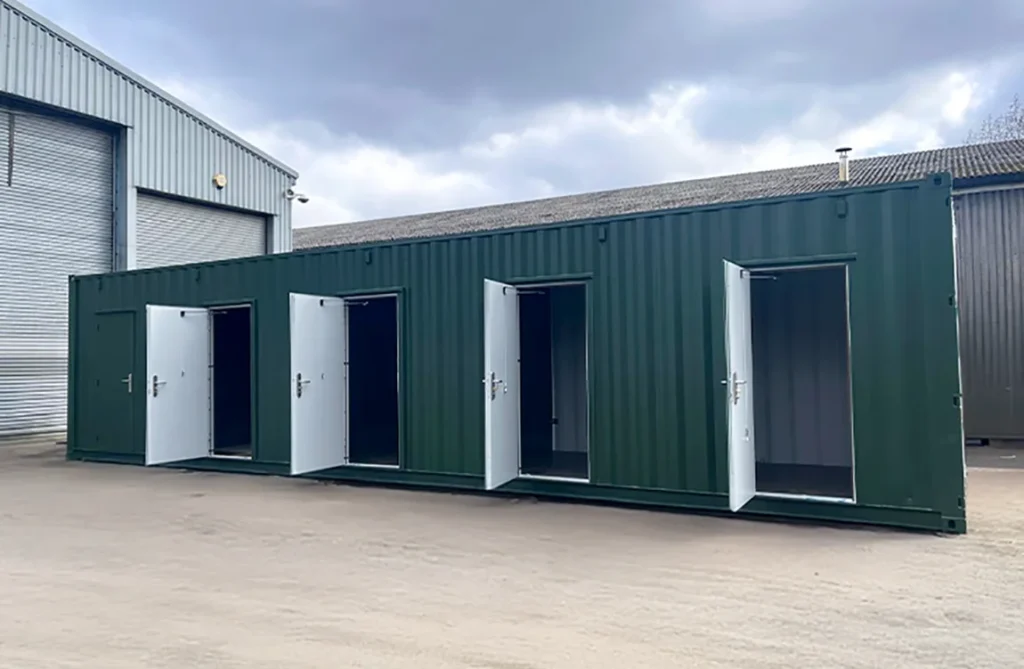
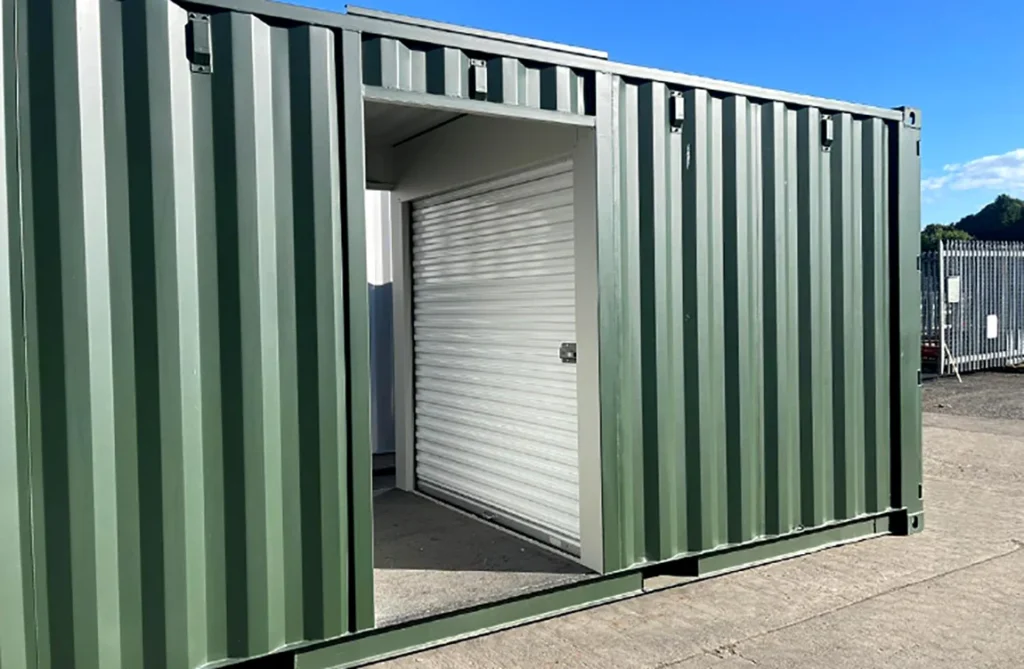
The company also sees continued opportunity for operators to increase capacity on constrained sites. Topper units, positioned as a second row above existing containers, are becoming increasingly popular because they can create additional rentable space without the need for more land. Multi-store configurations are also helping operators meet demand for smaller storage units.
“Standard containers remain a strong part of the market,” Glen says. “But customers increasingly see them as part of a wider solution, rather than simply a storage box.”
S Jones has also developed services aimed at helping established sites maintain their appearance and operational condition.
ClearRestore, launched as an industry-first service, is designed to restore the colour and visual appeal of faded or weathered containers without the disruption and expense associated with traditional restoration methods. Glen says the service has generated strong interest from operators looking to improve the presentation of older facilities.
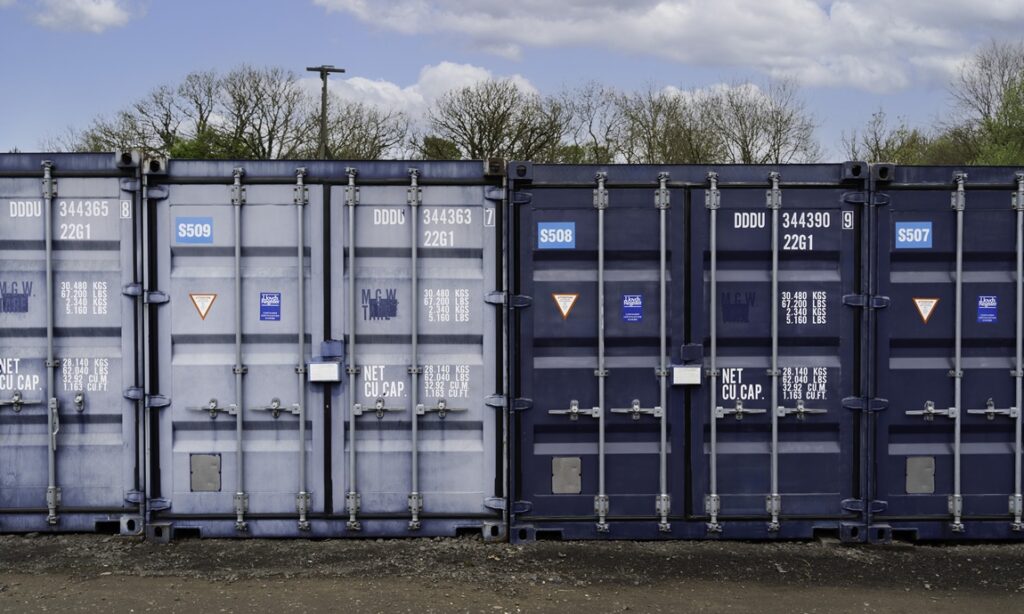
A tired-looking site can affect customer perception, he argues, particularly in a market where customers increasingly expect clean, secure and professional-looking facilities. Glen reports that some operators have seen improved enquiries and bookings after refreshing their container stock.
Alongside ClearRestore, S Jones has expanded its container repair capability from its Midlands depot and now provides a mobile repair service across Great Britain. Common work includes replacing security locks, repairing damaged doors, fixing leaks, and undertaking floor and side-panel repairs.
The aim, Glen says, is to help customers extend the useful life of their equipment while keeping sites safe, attractive and compliant.
One of the most significant changes across container self-storage has been the increasing use of unmanned and automated sites.
Technology has enabled operators to offer customers greater flexibility while retaining control over site access and security. Monitored CCTV, improved access-control systems and smart locking are all becoming more widely used.
S Jones has been exploring these opportunities with customers, including the development of Bluetooth-enabled locking systems. These can allow customers to access a container through a site app without relying on Wi-Fi or a strong mobile-phone signal, which can be particularly useful at rural locations.
Glen expects this trend to accelerate. He believes storage sites will become increasingly digital, with simpler booking, payment, access and account-management processes shaped by the customer experience people now expect in other parts of daily life.
The wider market has also continued to grow, with container self-storage increasingly serving both domestic and business customers. Flexible, accessible space is being used for everything from household possessions and home-working requirements to stockholding and operational storage.
Innovation remains central to S Jones Containers’ wider business, which includes container conversions for sectors ranging from workshops and plant rooms to laboratories and specialist operational environments.
The company’s focus on innovation has been recognised through manufacturing awards, and Glen sees scope for containers to play an increasingly important role in a lower-carbon and more adaptable economy.
He says advances in conversion design will enable containers to become more tailored, high-performance spaces, while improved logistics and digital tracking will increase transparency and efficiency across supply chains.
“We are always looking at ways to improve products, processes and service,” he says. “Containers are no longer simply transport equipment or basic storage units. They can provide practical infrastructure for a wide range of industries.”
Looking ahead, Glen believes the sector will continue to become more automated, customer-led and flexible. Demand for secure, reliable storage is likely to remain strong, while bespoke conversion work will grow alongside the core container sales market.
He would like to see more balanced and resilient supply chains, reducing the industry’s dependence on overseas manufacturing. However, he remains positive about the sector itself.
“It is a friendly and supportive industry,” Glen says. “People are knowledgeable, open and willing to help each other. With continued progress around standardisation, sustainability and customer guidance, it is an industry that can keep moving in the right direction.”






All the best bits, delivered once a month straight to your inbox

News and insights from the movers and storers industry