OUT NOW: SEPT/OCT ’26 ISSUE #182
News and insights from the movers and storers industry


20th May 2026
Editorial Team
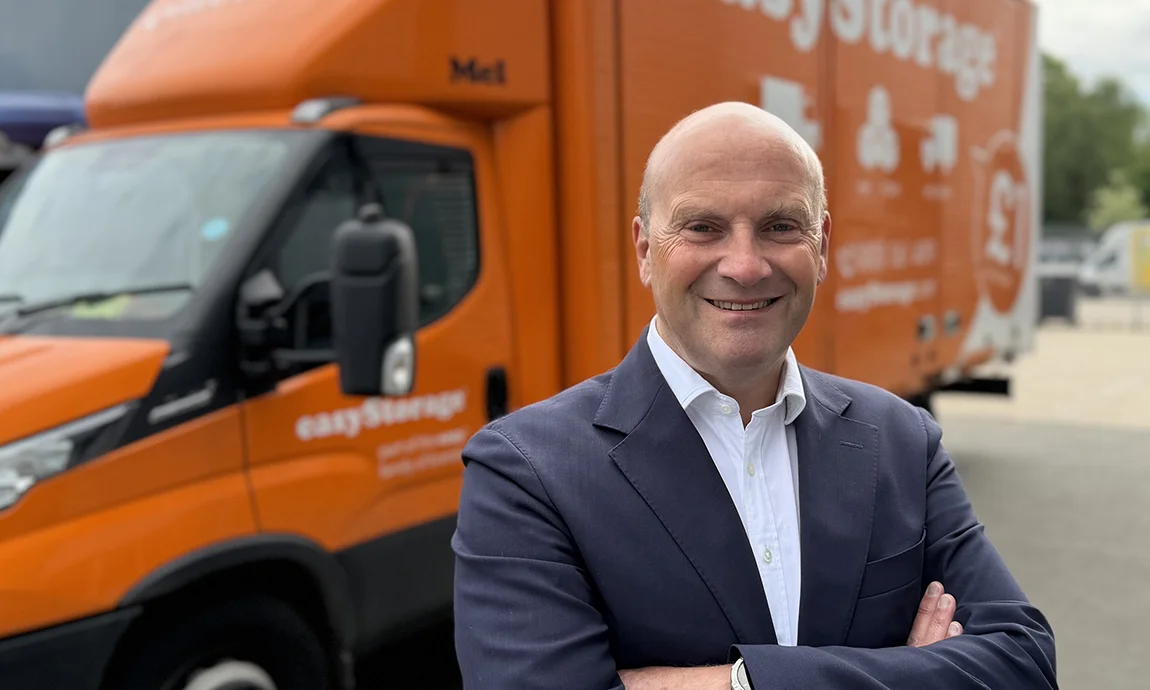
Patrick Hicks talks to Tim Slesinger, CEO of easyStorage, about disrupting the UK storage market, building a value brand, and why scale, technology and service must grow together.
When Tim Slesinger co-founded easyStorage, he was not looking for a small niche to occupy quietly. He had seen enough of storage, records management and recurring-revenue businesses to recognise something bigger: a market that looked oddly underdeveloped, structurally expensive and ready for reinvention.
Speaking to the Movers and Storers Magazine, Slesinger sets out a clear argument. In his view, the UK storage market has historically been held back – not by lack of demand, but by price, fragmentation and operating models that have too often made storage feel like a “distress purchase” rather than a normal part of life or business. easyStorage, he says, was built to change that.
Back in 2017, he says, the UK self-storage market was worth around £750 million, while in the United States it stood at roughly US$42 billion. To him, that imbalance did not make sense, especially in a market with hundreds of operators but only two stock market-listed businesses. “It just looked out of balance,” he says. “So I looked into it further.”
What he found reinforced his instinct. Storage, he argues, is one of the strongest recurring-revenue models in the physical economy. It is, as he puts it, “the original subscription business”. Yet in Britain it had been priced in a way that pushed customers away.
A key insight behind easyStorage was behavioural. In the US, storage had become sufficiently affordable to function as a lifestyle purchase. In the UK, by contrast, it was much more often triggered by disruption: bereavement, divorce, relocation, or another sudden life event. People were buying storage because something had “happened” to them – and then getting out as quickly as they could.
That difference mattered. Slesinger believed that if the price of storage could be reduced sharply, the buying pattern could shift from “event-driven” to “habitual”. In turn, customer lifetime value would increase. “When we started, the average length of stay was around 37 weeks. Today it is 63 weeks.”
For him, that is more than a KPI. It is proof that a lower-cost, more accessible proposition can reshape the market rather than simply fight over the same pool of customers. Make storage easier to buy, easier to understand and easier to live with, and customers stay longer.
That logic sat behind mobile self-storage. By avoiding the cost burden of prominent, high-profile big-box sites and instead storing goods in less expensive locations, easyStorage could lower price while adding convenience through collection from the customer’s home or premises. “We come to your door,” Slesinger says. “How can it not be more convenient than that?”
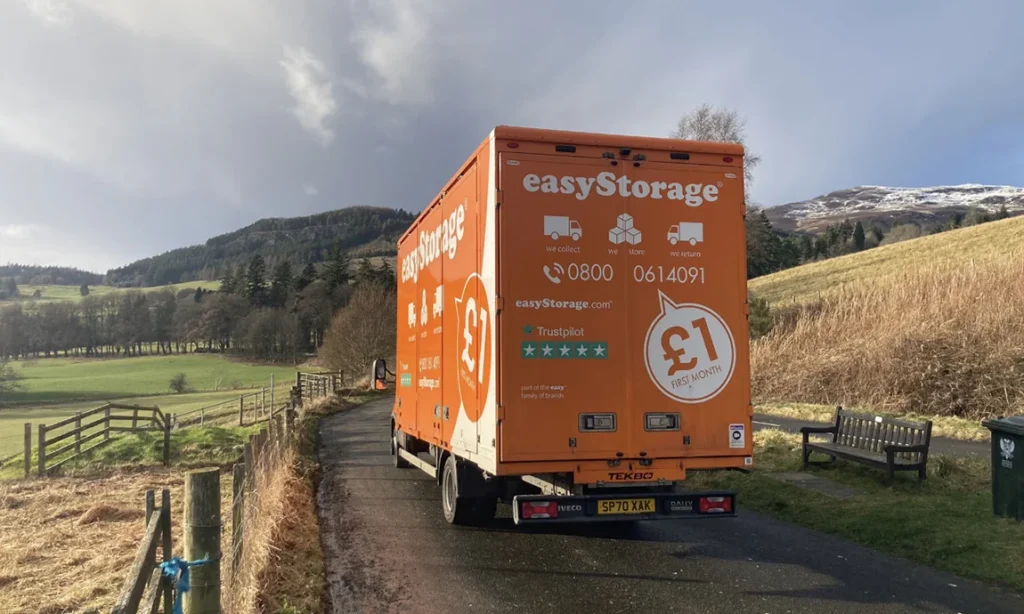
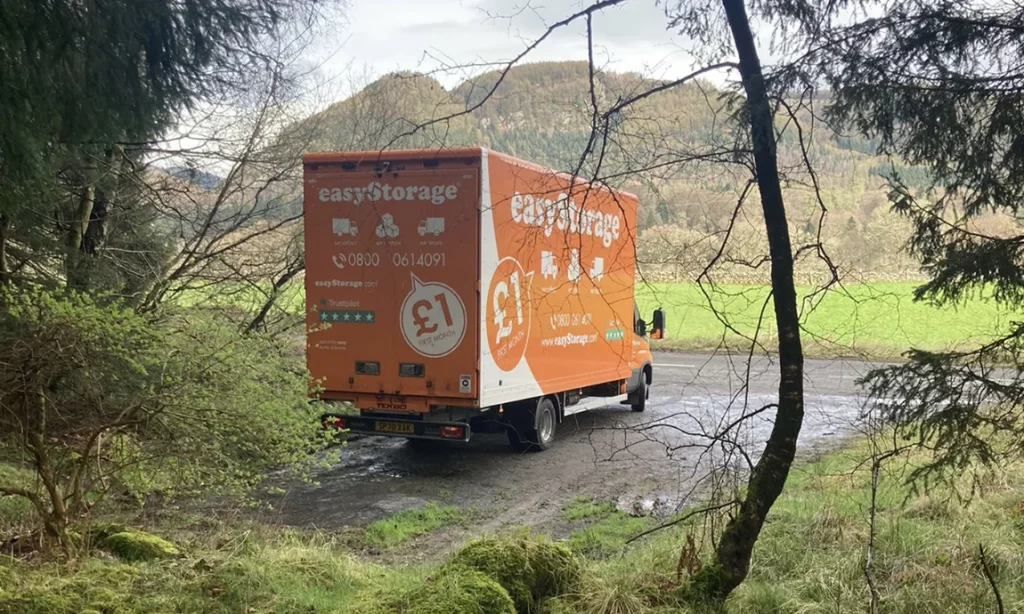
Convenience alone, however, was not enough. Slesinger knew that a challenger also needed a recognisable value identity. That led to the “Easy” family of brands and the partnership with the Easy Group – easyStorage is a licensee of the organisation. The point was not branding for its own sake, but a fast, clear signal of what the business stood for: accessible pricing, a straightforward proposition and mass-market reach.
The company’s model was also shaped by Slesinger’s view of the removals sector. While being very careful not to dismiss the traditional removals model – “there is absolutely a place for full-service, professionally packed moves, especially for larger households or higher-value possessions” – he argues that the economics of removals have often worked against affordability for the average customer.
He points to two cost drivers in particular: surveys and professional packing. Historically, he says, removals companies carried out many surveys for each successful booking, and the cost of unsuccessful surveys had to be absorbed somewhere. In practice that meant the customer who did proceed was indirectly paying for the cost of everyone else’s quotations.
Professional packing, meanwhile, is labour-intensive and valuable, but often not especially profitable. easyStorage’s answer was to strip back the model for smaller jobs: remove the survey, ask customers to estimate their requirements, encourage self-packing for most items, and reserve specialist packing for where it is genuinely needed.
The result is what Slesinger sees as a mass-market version of removals and storage: not the premium end, not a substitute for every job, but a more efficient offer for the many. His comparison is to aviation. Just as private aviation exists at one extreme and mass-market flying at another, the moving and storage sector, he believes, needs differentiated models that match customer priorities rather than assuming every move requires the same cost base.
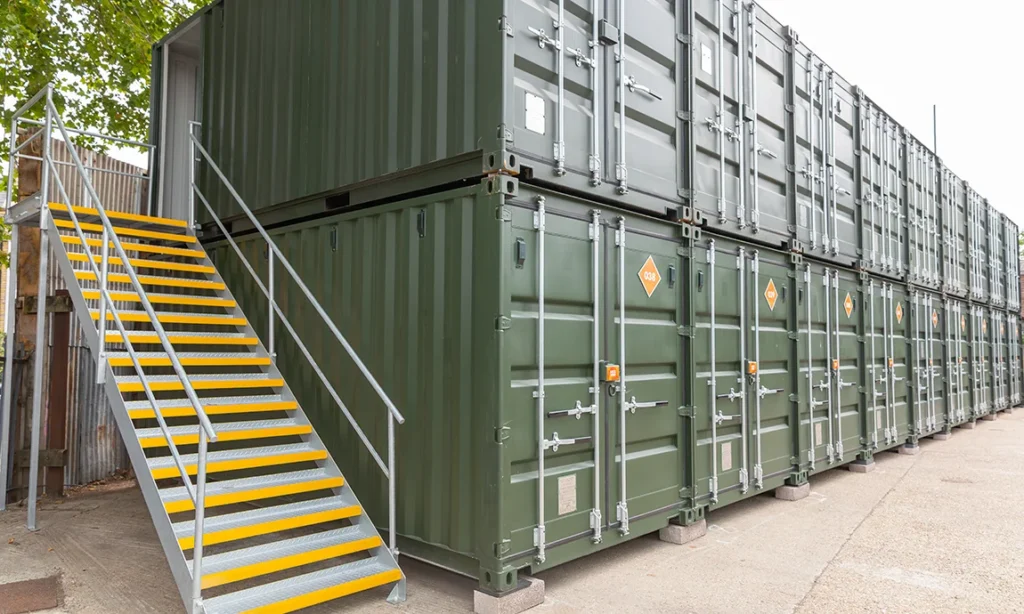
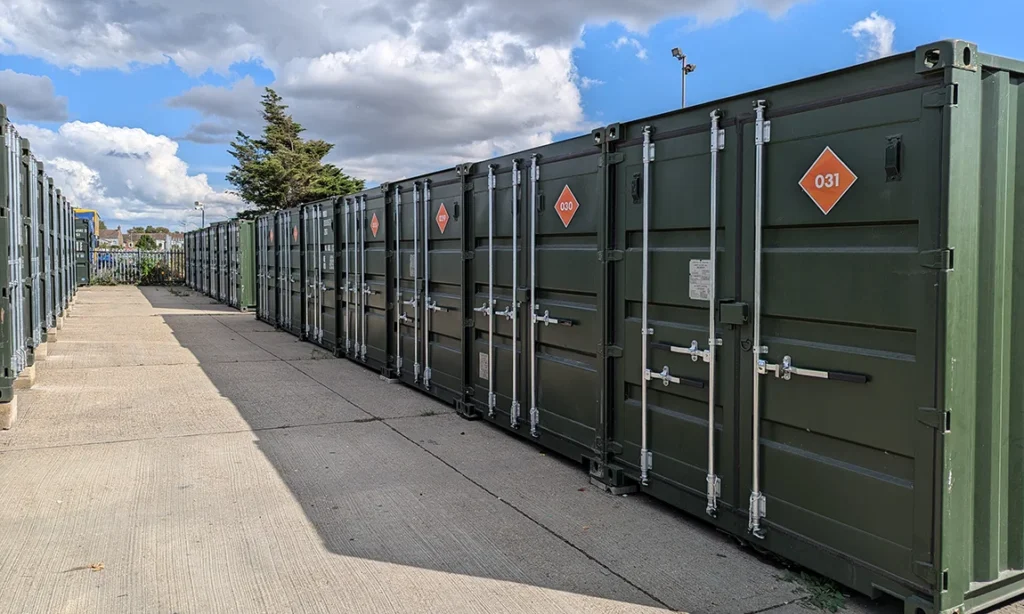
From its original mobile self-storage business, easyStorage expanded four years ago into drive-up self-storage, generally container-based and increasingly positioned by the company as a smarter, more professional and more branded proposition than the sector has historically offered. Here too, Slesinger saw fragmentation and underexploited potential.
At the time, he says, around 1,000 sites were operated by some 500 companies. Many had grown organically and informally – sometimes as “side businesses” – and had not benefited from the systems, processes and brand discipline that a scaling operator can bring. easyStorage saw an opportunity to smarten up that end of the market without losing the value appeal that made it attractive in the first place.
One of the more interesting aspects of easyStorage’s strategy is its mixed growth model. On the mobile side, franchising was built in from the start. Slesinger is emphatic that highly motivated owner-operators are hard to beat when the service is collected and delivered directly at the customer interface. Franchisees, as business owners, care deeply because the result is theirs.
easyStorage now covers around 85% of UK postcodes through its mobile self-storage franchise network.
However, on the container/drive-up side of the business, the picture is different – largely because sites are unmanned. That makes it easier to combine franchised, owned and acquired locations. The ambition is substantial: 300 container self-storage sites across the UK over the next five to seven years.
That roll-out, Slesinger says, is likely to involve all three routes. In today’s market, acquisitions are becoming more realistic as many long-standing operators reach a point where succession is uncertain, expansion has stalled, or changing rates and planning pressures have made assets that were, once, “passive” as more demanding to run.
Slesinger makes an important distinction between low-cost and low-quality. On the mobile side of the business, he believes prices needed to come down through efficiency. On the container and drive-up side, however, he argues the market has often been undervalued. Traditionally, container storage has traded at a very steep discount to walk-in self-storage. Some of that discount reflected the historic quality gap: weaker branding, less polished onboarding and a more ad hoc customer experience.
But if the product improves, he says, there is no reason for the discount to remain so wide. That feeds into one of his strongest themes: price and service do not have to move in opposite directions. “We do not believe in sacrificing service for price,” he emphasises.
Instead, the opportunity lies in using technology and process discipline to generate savings, then reinvesting part of those savings into better service while still retaining a price advantage. In Slesinger’s formulation, you can reduce price, keep margin and improve service at the same time, provided the operating model is efficient enough and the business has scale.
That brings us to one of the easyStorage business’s most significant investments. The company initially expected that existing software might be enough, but Slesinger found that there was no off-the-shelf system capable of integrating moving, warehousing, storage, franchise management and billing in the way the business required. The company therefore built its own platform – VAULT.
He describes it as the backbone of the operation. It supports the customer journey, franchise oversight, billing and accounting, and the operational link between multiple service lines. On unmanned container sites, it enables customers to complete sign-up, identity verification and access arrangements rapidly, without needing staff physically on site.
In practical terms, he says, a customer can arrive at a site in the early hours and still complete the journey into storage within minutes. For Slesinger, that kind of frictionless onboarding is what modern customers increasingly expect: confidence that they are paying a fair price, the ability to access space without delay, and responsive help when something goes wrong.
Artificial intelligence is part of that next phase, though Slesinger speaks about it with pragmatism rather than hype. easyStorage is experimenting with AI across dynamic pricing, customer service and operational efficiency. Some tools have worked, he says; others have not. But the direction of travel is obvious. A scaling business with distributed sites, multiple service lines and price-sensitive customers will increasingly depend on data-led decisions and faster service infrastructure.
Customers in container and drive-up storage, he suggests, want three simple things. First, they want to know they are paying the right price. Second, they want the speed and ease of immediate onboarding. Third, when access issues or technical glitches occur, they want quick answers and genuine empathy. Leaving should be easy too. Customers do not want to discover they are trapped in a long contract if their circumstances change.
If technology is the backbone, physical rollout is the engine. easyStorage has opened 35 drive-up sites in the past three years and is currently opening at a pace of around two a month. That expansion has translated into customer growth, but Slesinger is careful to stress that growth without retention is of limited value.
Around 63% of easyStorage’s drive-up/container customers are small businesses. “That is a significant number,” says Slesinger, “because small firms, trades and local operators often need storage not as a one-off emergency measure, but as a stable part of how they run their businesses.”
Keep the proposition sensible, he argues, and those relationships can become long-term rather than fleeting.
On the bigger picture, Slesinger remains confident. The UK storage market has already expanded sharply since easyStorage launched, and he believes there is substantial headroom left. Using US penetration as a guide, he argues that the British market could eventually be worth between £3 billion and £5 billion.
That confidence also informs the company’s international outlook. easyStorage has already entered the Netherlands through a licensing arrangement and local partnership, and Slesinger says wider European expansion is firmly on the agenda. In the UK, however, the aim remains straightforward: to become the “go-to brand” for storage – a target built on brand, technology, financing and rollout discipline.
Asked what lessons come from scaling at pace, Slesinger offers a simple but effective image: a three-legged stool. Marketing, finance and operations, he says, must stay in tune. Scale one of these too far ahead of the others and the whole structure becomes unstable.
It is a useful metaphor for a business trying to do several things at once: build consumer trust, expand a physical footprint, integrate digital systems and redefine value in a market that has often operated in a much more fragmented way. The argument is not that growth should be cautious. It is that growth has to be balanced.
Taken together, the interview reveals a company that does not see itself merely as another storage operator. easyStorage is trying to change the terms of the category itself: to make storage more routine, more transparent, more technologically enabled and more affordable without stripping out the human side of service.
Whether in mobile storage, drive-up units, franchising or European expansion, the common thread is clear. Slesinger believes the market grows when customers feel comfortable staying, not pressured to leave. For years, much of the industry has been built around the economics of scarcity, inconvenience or legacy pricing. easyStorage is betting on a different future: one in which storage becomes less of a reluctant necessity and more of a normal, trusted and scalable service.
If he is right, that shift will not just benefit one operator. It may help define the next phase of the entire sector.
easyStorage has also demonstrated that mobile self-storage can scale nationally – without relying solely on company-owned infrastructure. Alongside its franchise network, the business has increasingly partnered with traditional removals and storage operators to extend coverage, improve utilisation and create a broader service footprint.
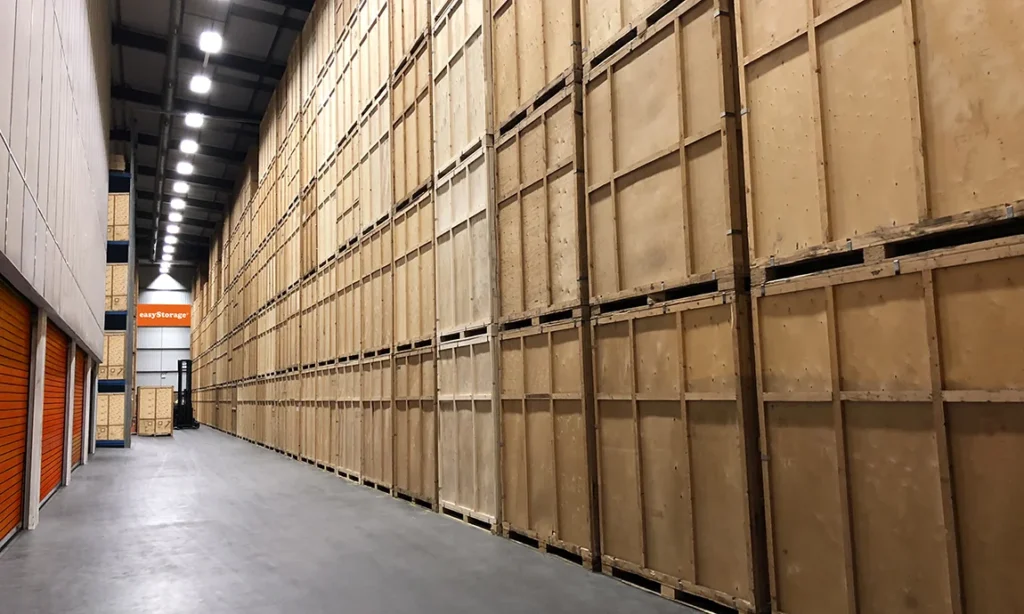
One example is the company’s “Drop & Store” model. Rather than requiring easyStorage to collect every order, customers can bring their belongings directly to approved partner depots and storage facilities. That approach reduces transport and labour costs, making storage cheaper and more accessible for customers, while simultaneously generating incremental business for local operators whose facilities may otherwise have spare capacity.
For easyStorage, the model improves scalability and operational efficiency by reducing collection costs and increasing geographic reach without the need for equivalent capital investment in vehicles, depots or staffing. For partner companies, it creates an additional revenue stream, introduces new customers and helps improve utilisation of existing infrastructure.
Slesinger sees this as an important evolution of the mobile self-storage model. Rather than competing against the traditional removals and storage industry, easyStorage increasingly positions itself as a platform capable of working alongside established operators to create a nationwide network with shared economic benefits. In practice, he argues, the combination of franchising, partnerships and technology creates a far more scalable model than relying purely on centrally operated logistics.





All the best bits, delivered once a month straight to your inbox

News and insights from the movers and storers industry