OUT NOW: NOV/DEC ’26 ISSUE #183
News and insights from the movers and storers industry


27th November 2026
Editorial Team

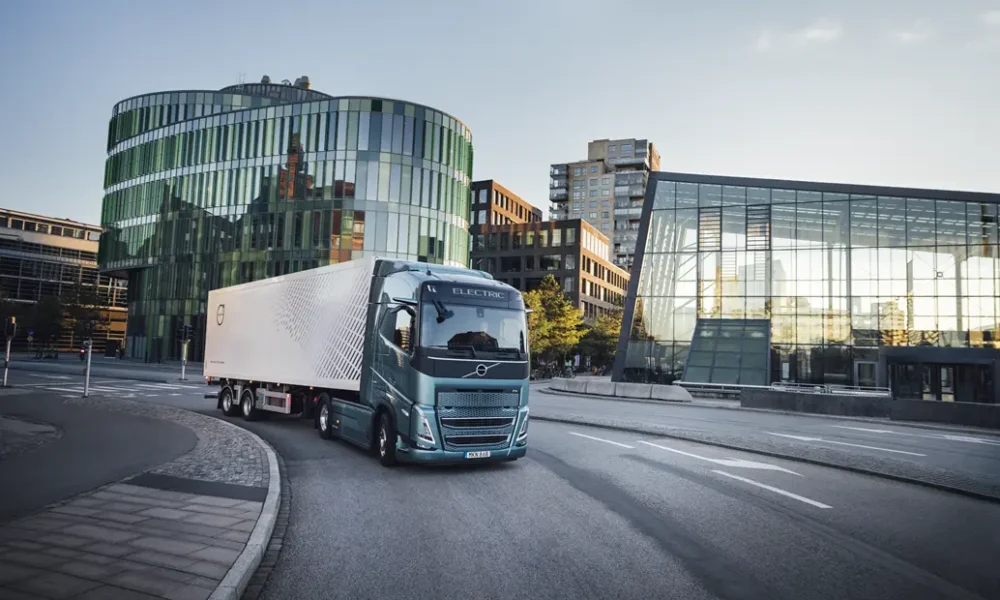
The case for battery-electric commercial vehicles (BEV) has traditionally centred on carbon. But soaring diesel costs, energy security, greater powers for regional mayors and growing evidence about the health benefits of cleaner air could change the calculation. For urban delivery operators, is it time to look at BEV again?
For years, the commercial vehicle industry has been told electrification is coming. Manufacturers have invested billions, the charging network is expanding and virtually every major van and truck manufacturer now has battery-electric products.
Yet, as Destination Net Zero has consistently argued, operators cannot run fleets on environmental ambition alone. A commercial vehicle is an earning asset. It must carry the payload, complete the route, recharge reliably and ultimately make money.
But the events of 2026 are adding a new dimension to the debate. This is no longer solely about decarbonisation. It is increasingly about energy security, operating costs and the changing nature of our cities. Urban delivery could be where those pressures converge first.
Diesel’s great advantage has always been familiarity. The infrastructure exists, refuelling takes minutes and operators understand exactly what it can do. But with UK diesel around £2 per litre and oil prices under pressure, its biggest weakness is becoming increasingly apparent: Britain cannot control the international forces determining its price and availability.
The Strait of Hormuz demonstrates that vulnerability. Huge quantities of the world’s oil and refined products pass through a relatively narrow geographical bottleneck. Disruption there can rapidly travel from the Gulf to a British filling station and ultimately onto an operator’s balance sheet.
The situation has become serious enough for a coordinated release of 100 million barrels of emergency oil and refined-product reserves. Nobody is suggesting diesel rationing is imminent in Britain, but the fact it can realistically enter the conversation should make fleet operators think.
We have spent years discussing range anxiety. Perhaps operators should also consider diesel anxiety. What happens to the economics of a fleet at £2.25, £2.50 or even £3 per litre? What happens if future supply disruption results in governments having to prioritise available fuel?
Vehicles purchased today could still be working in 2031, so their exposure to diesel prices extends far beyond today’s forecourt price. Electricity isn’t immune from price volatility and infrastructure remains a significant challenge, something Destination Net Zero regularly highlights. However, electricity can be generated domestically from multiple sources. A BEV doesn’t care whether its electrons originated from wind, solar, nuclear or gas. Diesel doesn’t have that flexibility.
There is another change taking place. Government policy is moving towards greater devolution, with directly elected mayors potentially gaining increasing influence over transport, infrastructure and economic development.
That matters to commercial vehicle operators because urban transport policy could increasingly be shaped locally. A mayor doesn’t simply see a national vehicle parc; they see congestion, air pollution, schools, hospitals, residents and businesses.
Greater local powers could therefore produce more clean-air measures, zero-emission delivery areas, charging initiatives, consolidation centres or incentives for businesses prepared to electrify. For operators entering major cities every day, the regulatory environment surrounding a diesel vehicle could consequently become increasingly different from that facing its electric equivalent.
There is also an increasingly powerful health dimension. A five-year study involving more than 3,400 schoolchildren, and involving the University of Bedfordshire alongside other universities, examined children’s lung development following the introduction of London’s Ultra Low Emission Zone.
The findings indicated that improvements in air quality were associated with improved lung-growth trajectories. That potentially changes the political conversation. Clean-air zones have traditionally been debated around emissions limits, vehicle standards and charges. Evidence linking cleaner air with improved lung development in children gives policymakers a very different argument.
As Destination Net Zero has reported repeatedly, decarbonising transport isn’t simply about CO₂. In densely populated urban environments, removing tailpipe emissions can also have an immediate local impact.
This doesn’t mean every diesel commercial vehicle should suddenly be replaced. Long-distance heavy haulage still presents significant challenges around battery capacity, charging availability, grid connections, payload and acquisition cost.
Urban distribution is different. A delivery van or rigid truck may leave the same depot each morning, cover a predictable mileage and return every evening. Stop-start driving suits regenerative braking, lower noise benefits residential deliveries and overnight depot charging can reduce dependence on the public network. That makes urban distribution arguably one of the strongest applications for battery-electric commercial vehicles.
Perhaps fleet managers also need to change the spreadsheet. Of course, compare vehicle price, finance, maintenance, residual value, diesel and electricity, but add some new questions. What is our exposure to imported diesel? What happens to our TCO at £2.50 per litre? What value does energy security have? What is our exposure to future urban restrictions? What happens if our customers increasingly demand zero-emission deliveries?
Destination Net Zero’s position has never been that operators should buy electric vehicles simply because they are told to. The operational and financial case has to work. But circumstances change, and the circumstances surrounding diesel are changing remarkably quickly.
The tipping point for electric commercial vehicles may therefore not arrive because somebody invents a revolutionary new battery. It could come through several pressures converging: expensive diesel, geopolitical instability, concerns over energy security, stronger regional mayors, tougher urban policies and increasingly persuasive evidence about the health benefits of cleaner air.
For a 44-tonne artic travelling across Europe, the argument remains complicated. But for the 7.5-tonner delivering into Manchester, the supermarket van making dozens of urban drops or the parcel vehicle covering 80 miles before returning to its depot every evening, it may be time to run the numbers again.
For years we’ve asked: “Why should we go electric?”
Perhaps the more pertinent question for urban delivery in 2026 is becoming: “Why are we still burning imported diesel to do it?”






All the best bits, delivered once a month straight to your inbox

27th October 2026
Editorial Team
5th November 2026
Editorial Team

6th August 2026
Editorial Team
News and insights from the movers and storers industry