OUT NOW: SEPT/OCT ’26 ISSUE #182
News and insights from the movers and storers industry


7th October 2026
Editorial Team
13 mins read
Features | News | Technology
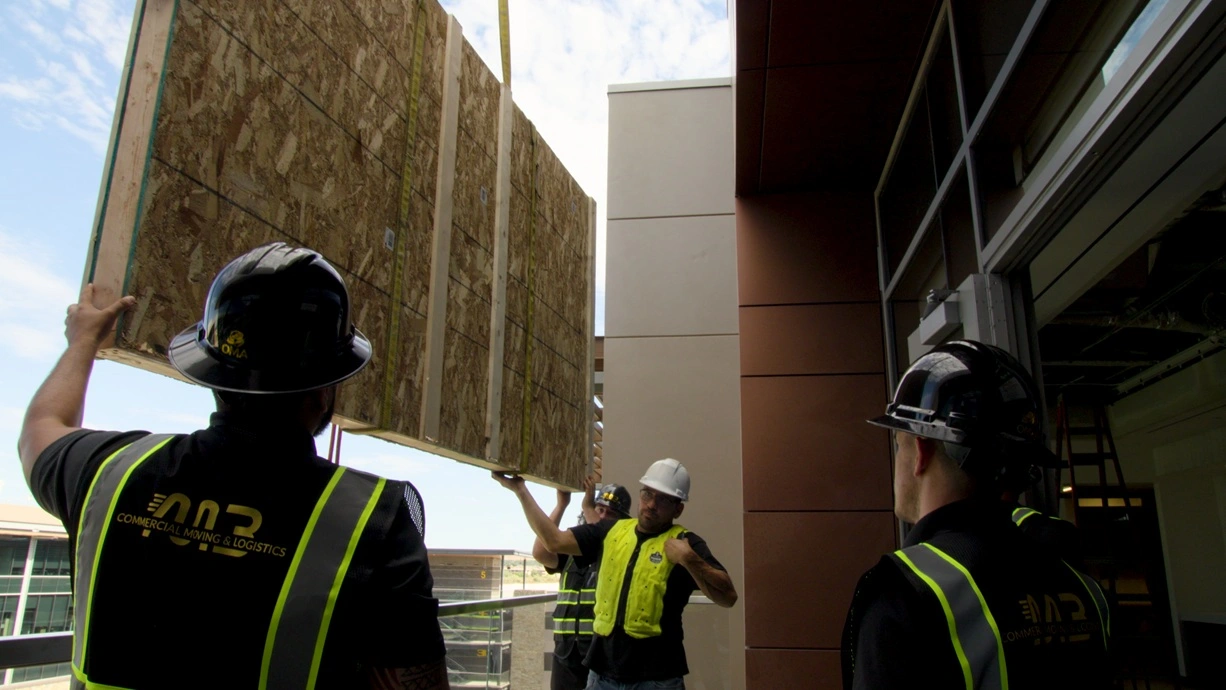
Commercial relocation must be about more than just “moving things”. Jim Stevens of Commercial Pro-Move Systems and M3 Commercial Moving & Logistics explains why.
Commercial relocation is not simply a larger version of a household move. It is a business-continuity event involving people, technology, facilities, security, assets, and reputation.
Across the United Kingdom, the United States and Europe, the industry has an opportunity to create a more consistent understanding of what professional commercial relocation should look like – and what clients should reasonably expect from those entrusted with moving their businesses.
Ask most business leaders what they expect from a commercial mover and the answer may sound simple: move everything from one location to another without damage and with minimal disruption.
In practice, however, a modern office or facility relocation can involve hundreds or thousands of employees, multiple buildings, sensitive technology, confidential information, specialist furniture, valuable equipment, landlords, facilities managers, IT departments, security teams, construction contractors and other stakeholders. The physical move is only one part of the assignment.
The real objective is business continuity. A client wants employees to leave one workplace and become productive in another as quickly and smoothly as possible. They want their assets and buildings protected, technology handled correctly, schedules maintained, and people properly informed. Above all, they want predictability. That is why standards matter.
The discussion about standards should not imply that the commercial relocation industry is starting from nothing. Important work has already been done by educators, governing bodies, and experienced operators who recognised that commercial moving requires specialised knowledge.
In the United Kingdom, BS 8522:2009, Furniture removal activities – Commercial moving services, established requirements for defining the service, gathering preliminary information, supplying quotations, carrying out the move and monitoring service performance. The fact that the Standard has been considered for modernisation also reinforces an important point: professional standards must evolve, just as workplaces, technology, data-security concerns and operating practices change.
In the United States, an important framework has been developed through the International Office Moving Institute (IOMI) founded by Ed Katz.
Katz has spent decades advancing the position that office moving should be treated as a specialised discipline, rather than simply another form of transportation. Through IOMI, moving professionals have been taught structured methods for surveying and estimating projects, planning and managing commercial moves, protecting buildings and assets, and performing the work in ways intended to reduce employee injuries, cargo damage and operational failures.
That contribution is significant because it reflects what a professional standard should accomplish: capture experience, organise it, teach it and make successful performance more repeatable. The industry does not need to discard the knowledge already developed. It needs to build upon it and make professional expectations more consistent and visible to clients.
The word “standards” can make some business owners think of regulation, bureaucracy or outside interference. That should not be the goal. A useful professional standard simply establishes a minimum level of competence, planning, and performance that a customer should reasonably expect when purchasing a specialised service.
Nor does the industry need one identical global rulebook. Commercial movers operate under different legal, labour, transportation and building requirements in the United States, the United Kingdom and individual European countries. Yet the fundamentals of a well-managed commercial relocation are remarkably similar.
A project should be surveyed accurately. The estimate should reflect the work actually required. The move should be properly planned. Buildings and assets should be protected. Employees should work safely. Technology and sensitive equipment should receive appropriate treatment. Responsibilities should be clear. The client should understand the process. The mover should have systems for delivering what was promised.
Those principles cross borders.
A meaningful standard begins well before the first truck arrives. It starts with proper discovery and estimating. The mover needs to understand what is moving and what is not, which departments are business-critical, what equipment needs specialised handling, what building restrictions apply, when work can occur, what protection is required, who is responsible for technology, and how the mover will coordinate with landlords, building management, IT providers, furniture installers and other contractors.
A professional estimate should therefore come from a disciplined survey and planning process rather than simply calculating labour hours and vehicle requirements. One of the enduring lessons behind IOMI is that ‘estimating’ and ‘operations’ are inseparable. If a provider does not fully understand how a project must be performed, it is unlikely to understand what the project should cost. Poor estimating can quickly become an operational problem, producing inadequate staffing, insufficient equipment, excessive overtime, rushed work and missed deadlines.
The same discipline applies to project management. Complex relocations require clear responsibility. The client should know who is in charge, how decisions will be made, how changes will be communicated and how problems will be escalated.
A qualified commercial move manager must understand scheduling, sequencing, labour planning, building requirements, client communication and contingency planning. On larger projects, that person may also have to coordinate several parties that do not report to the moving company at all.
There is an extraordinary amount of experience in the commercial moving industry. The challenge is that experience often resides with a relatively small number of people inside an organisation.
So the question then arises: “What happens when the person with 30 years of experience isn’t in the room?” Can another salesperson properly qualify the opportunity? Can another estimator develop the plan? Can another project manager execute it? Can another crew leader deliver the same result?
Experience tells us what works. Systems allow other people to repeat it.
That is an important distinction between having people who know commercial moving and building an organisation with true commercial capability. The opportunity is to capture what experienced operators know, turn it into teachable processes, and continuously improve those processes as the business grows.
The workforce itself must also be trained for the commercial environment. Crews may be handling systems furniture, computers, audiovisual equipment, medical devices, heavy machinery, laboratory equipment, files, artwork, servers or other specialised assets while working inside occupied buildings alongside employees and contractors.
Professionalism therefore includes much more than physical strength and moving skill. It includes workplace conduct, building protection, labelling systems, chain of command, equipment use, security requirements and safe operating procedures.
The client’s risk extends beyond furniture and equipment. Floors, walls, doors, lifts, corridors, and common areas can represent substantial financial exposure. A relatively small failure in building protection can damage expensive finishes, create disputes with property management, and turn an otherwise successful move into a poor client experience.
Protection should therefore be planned, not improvised. A professional mover should know which surfaces require protection, what materials or equipment will be used, when they will be installed and how they will be monitored during the project. The same principle applies to technology and sensitive assets. Preventing damage is always more valuable than efficiently processing a claim after the fact.
Communication deserves equal attention. Many disappointing relocations are not caused by major operational failures but by uncertainty. Disappointment lies in the grey area between expectations and reality. The client does not know what is happening. Employees have not received clear instructions. The schedule changes without adequate notice. Building management has one expectation while the moving company has another. Responsibility for a particular task is unclear.
A professional relocation should therefore include a communication plan covering the period before, during and after the move. Clients should understand what is expected of them and what they can expect from their mover. Documentation creates accountability; clear communication creates confidence. Clear communication minimises the risk of grey throughout an already stressful process for the client.
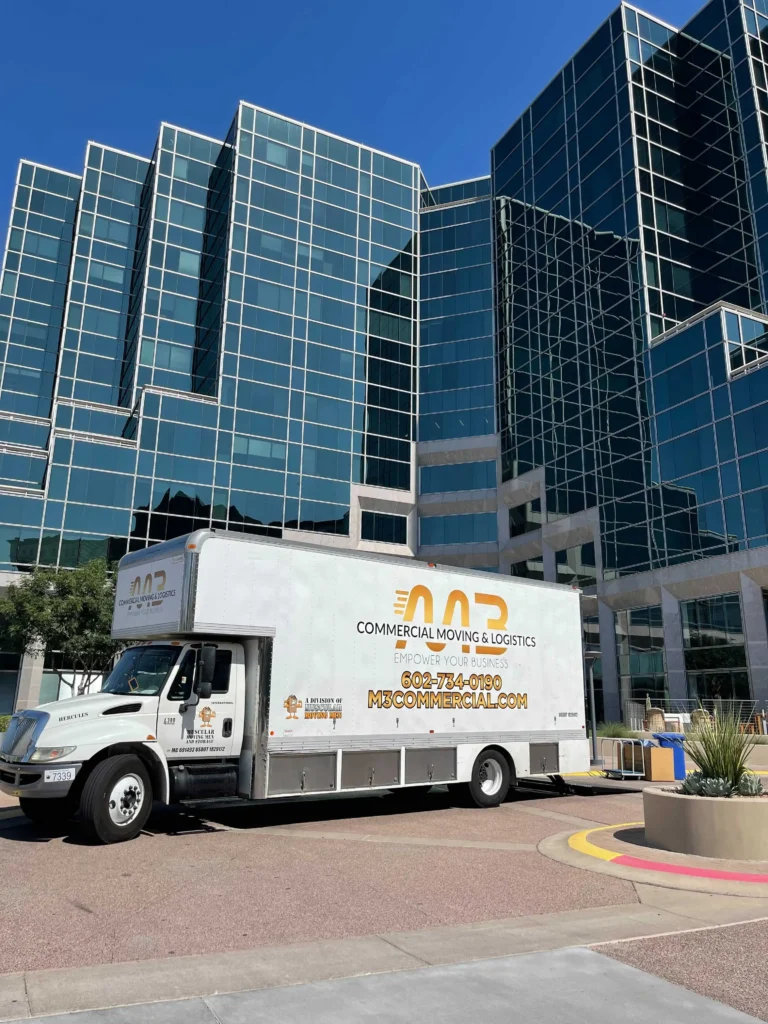
Moving companies have traditionally measured success through operational metrics such as labour hours, vehicle utilisation, claims, revenue, costs and project profitability. All remain important, but the client experience deserves equal weight.
Was the client properly prepared? Were expectations clearly established? Did the moving company communicate effectively? Did employees understand what they needed to do? Was building management properly coordinated? Were problems handled professionally? Did the organisation resume normal operations when expected? Would the client willingly use the mover again?
Those questions move commercial relocation beyond a transportation transaction and into the category of a professional service.
This distinction is also important commercially. When buyers cannot easily distinguish between providers, price becomes disproportionately important. If three companies appear to offer essentially the same service, choosing the lowest bid can seem entirely rational. Yet those bids may represent very different levels of planning, capability, and risk. If the customer cannot see the difference, we should not be surprised when they buy on price.
Clear standards help make those differences visible. A company that invests in trained personnel, qualified project managers, disciplined estimating, appropriate equipment, building protection and documented operating procedures should be able to demonstrate why those investments matter. The conversation can then shift from “How much will you charge to move us?” to “How will you ensure our relocation succeeds?”. That is a better conversation for both the client and the industry.
As the industry becomes more professional, credentials and designations will inevitably play a larger role. They must be meaningful. A logo on a website has little value unless the client understands what stands behind it.
A credential should not simply tell the market that a company attended something. It should tell the market what that company can do.
Any designation intended to identify a qualified commercial relocation provider should represent demonstrated knowledge and capability rather than simple participation. That might include education, testing, operating requirements, continuing development, documented procedures or periodic audits. The exact mechanism can vary by market, but the principle should remain the same: if a credential is intended to give customers confidence, it must be credible.
This is ultimately about the reputation of the industry itself. The best commercial movers already function as consultants, planners, logistics specialists, project managers, and risk managers. For a critical period in the life of the client organisation, they become part of its business-continuity strategy. The public image of commercial relocation should reflect that level of responsibility.
The future of commercial relocation is increasingly international. Corporations operate across borders, facilities professionals manage multi-country portfolios and major clients may expect comparable service whether they are relocating an operation in Atlanta, London, Amsterdam, Frankfurt, Paris, or Madrid.
There will always be differences in local regulation, labour practices, transport rules and building procedures. There should not be dramatic differences in the fundamental meaning of professionalism.
The industry does not need every company to operate identically. It does need greater agreement around the essentials: survey accurately, estimate responsibly, plan thoroughly, protect people and property, train the workforce, communicate clearly, manage professionally and deliver what was promised.
Commercial relocation will become more complicated, not less. Technology will continue to evolve. Data security will become more important. Sustainability expectations will grow. Clients will demand greater transparency and become even less tolerant of business interruption.
The opportunity is to build upon the work already done by standards bodies, industry educators, experienced operators and organisations such as IOMI and create a more recognisable body of professional practice across the market. Standards should not suppress innovation or competition. They should establish the level beneath which professional performance should not fall, providing a pathway for companies that want to rise well above it.
The ultimate beneficiary is the customer. When clients consistently receive better outcomes, the reputation and value of the entire commercial relocation profession rises with them.
Over the course of my career, I’ve been fortunate to learn from some exceptional people in this industry. I’ve learned from organisations such as IOMI. I’ve learned from clients. I’ve learned from building companies and teams. And I’ve learned plenty from getting things wrong.
Some of those mistakes may have taught me the most.
Eventually, a question emerged: “What if we could help other moving companies learn some of these lessons without having to recreate every mistake themselves?”
That question is part of why we built Commercial Pro-Move Systems — CPMS. CPMS is designed to help moving companies intentionally build, scale and improve commercial capabilities across sales, estimating, operations, project management, leadership and client experience. For companies entering commercial moving, that means helping build the foundation correctly. For established commercial movers, the question is different:
Our work doesn’t begin with CPMS. It builds upon decades of knowledge developed throughout the commercial moving profession, including the estimating, safety and operating principles advanced by Ed Katz and the International Office Moving Institute, IOMI.
We believe the next opportunity is to take that foundation, combine it with proven modern operating systems and leadership development, and help make commercial excellence more teachable, measurable and repeatable.
If you’re building commercial capabilities, scaling an existing commercial operation, or simply asking how much better your organisation could become, I invite you to see what we’re building.
Jim Stevens is Founder & Lead Mentor, Commercial Pro-Move Systems; and COO, M3 Commercial Moving & Logistics.





All the best bits, delivered once a month straight to your inbox

News and insights from the movers and storers industry